2025 marked a transition year for Babylon.
What began as a thesis around trustless Bitcoin security matured into live infrastructure, mainnet deployments, and the first real proofs that native Bitcoin can be productive onchain without custodians, wrappers, or compromise.
This blog looks back at the milestones that defined Babylon’s journey in 2025 and how each step moved Bitcoin closer to becoming usable, verifiable collateral across decentralized systems.
January: A New Identity for a New Phase
We began 2025 with a refreshed Babylon brand and website.
The update reflected a shift from research-first exploration to protocol delivery. The focus became clearer: enabling native Bitcoin to secure, coordinate, and participate in decentralized systems without leaving the Bitcoin base layer.
This reset set the tone for the year ahead.
April: Babylon Genesis Goes Live
In April, Babylon Genesis officially launched.
Babylon Genesis became the world’s first Layer 1 blockchain secured by Bitcoin, moving native Bitcoin staking from theory into mainnet reality. For the first time, Bitcoin could be used to provide cryptoeconomic security to Proof-of-Stake systems without bridges, wrappers, or custody transfer.
This milestone established Babylon Bitcoin Staking as foundational infrastructure rather than an experiment.
August: Validation Across the Ecosystem
August brought two major forms of validation.
First, Kraken announced Babylon as its Bitcoin staking solution, marking a key moment where Bitcoin staking entered the mainstream through a major exchange integration. Native BTC staking became accessible to a broader audience with no lockups and rewards paid in BABY.
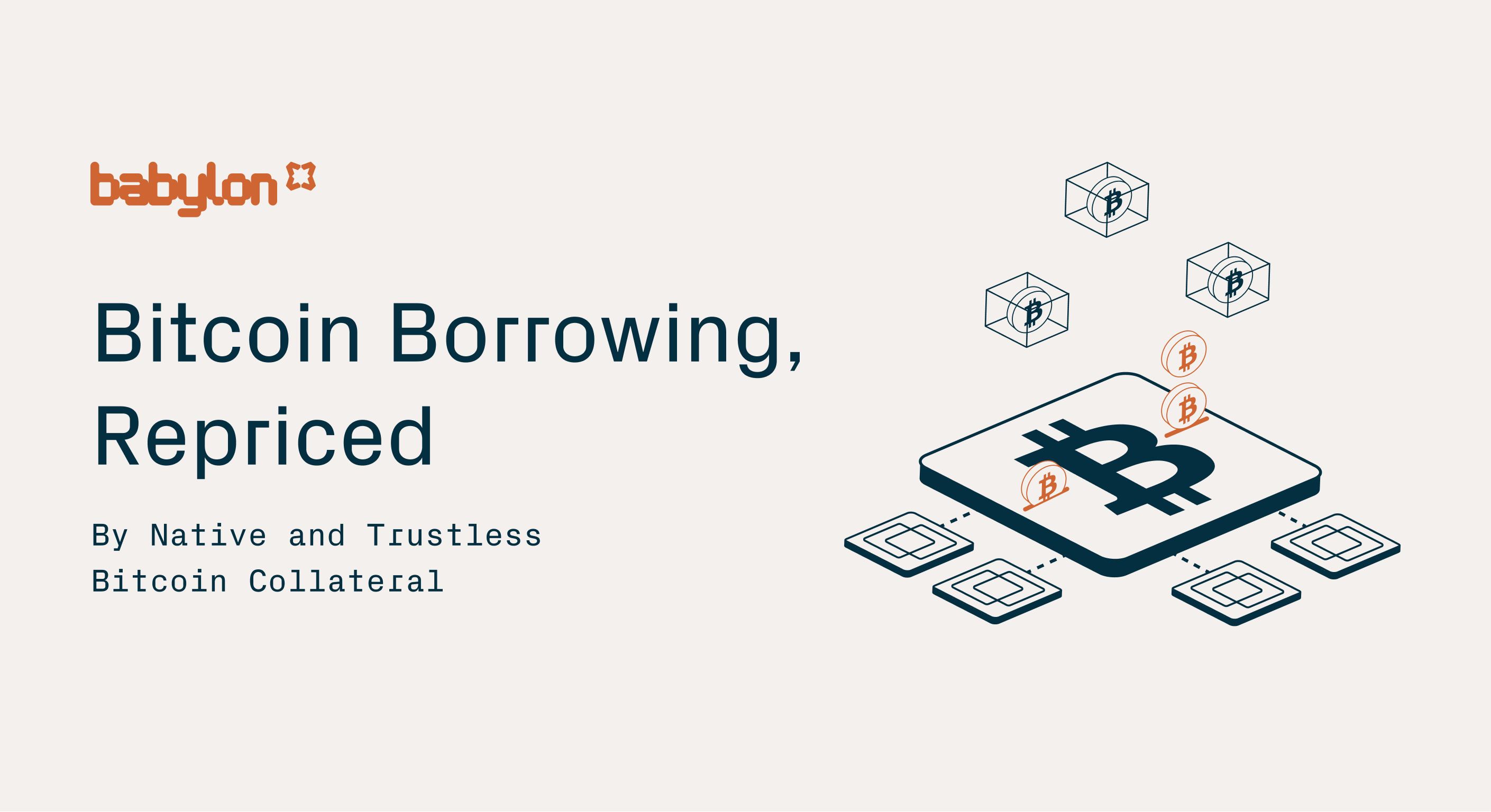
Second, we published the Trustless Bitcoin Vaults whitepaper. The paper outlined a new design for using native Bitcoin as collateral while keeping BTC on Bitcoin, under the user’s control, and verifiable by external systems.
Notably, the Trustless Bitcoin Vaults whitepaper was timestamped using the same Bitcoin UTXO as the original Bitcoin Staking whitepaper. Linked transactions, same chain, new chapter.
October: Trustless Bitcoin Vaults, Tested with Real BTC
October marked a turning point from design to validation.
Babylon completed its first Trustless Bitcoin Vaults experiment, successfully borrowing USDC against native BTC on Ethereum mainnet with Morpho. This was not a simulation or testnet environment. It was real Bitcoin, real collateral, and real settlement.
The experiment demonstrated that native Bitcoin can be used in DeFi without wrappers or custodians, while remaining locked and verifiable on Bitcoin itself.
December: Native Bitcoin Collateral Comes to DeFi at Scale
In December, Babylon and Aave Labs announced plans to extend Trustless Bitcoin Vaults to Aave V4.
The collaboration will introduce a native Bitcoin backed Spoke within Aave’s Hub and Spoke architecture, allowing BTC to be used directly as collateral in one of the largest lending markets in DeFi. No wrapped assets. No centralized custody. Just native Bitcoin secured on Bitcoin.
This announcement expanded the scope of Trustless Bitcoin Vaults from experimentation into institutional-grade financial infrastructure.
What Changed in 2025
Across the year, several themes became clear:
- Bitcoin staking moved from concept to production
- Native BTC secured real networks and real value
- Trustless Bitcoin Vaults proved viable with live assets
- Bitcoin utility expanded without sacrificing self-custody
- Institutional pathways began forming around native BTC collateral
By the end of 2025, Babylon infrastructure was securing more than $10 billion worth of native Bitcoin across staking and vault designs, demonstrating sustained demand for trust-minimized Bitcoin productivity.
Looking Ahead
2025 was not about finishing the journey but about proving the foundation works.
As Bitcoin continues to integrate into global financial systems, the need for verifiable, trust-minimized infrastructure will only grow. Babylon enters 2026 focused on scaling Trustless Bitcoin Vaults, expanding native BTC use cases, and strengthening Bitcoin’s role as productive, onchain collateral.
Bitcoin stayed on Bitcoin.
The keys stayed with users.
The infrastructure matured.
Thank you to the builders, researchers, operators, and community members who helped shape this year.
More is coming.